
The environmental price of AI sovereignty
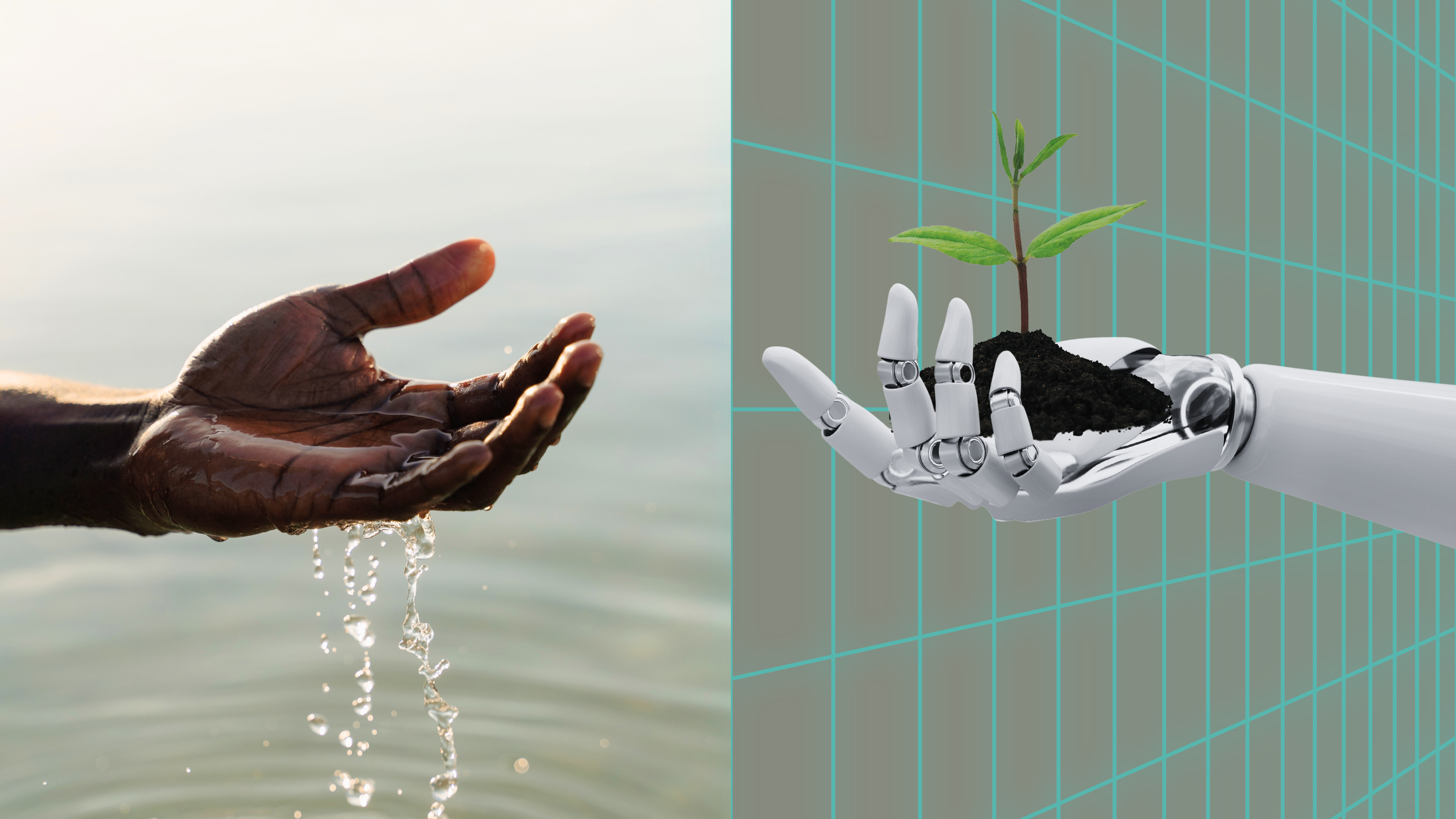
Governments have spent 2026 treating computing capacity as a matter of sovereignty. In August, the UK government rejected the Green Party's call for a moratorium on large data centres within a day, on the grounds that a pause would send investment abroad. The Gulf also took a similar stance, with even more capital behind it, when Mohammed Soliman of the Middle East Institute described the region's ambitious data centre growth as "converting surplus capital, land and, above all, cheap energy into the scarcest resource of this era, which is compute".
These parallel stances make a strong case to reduce risks on national cyber security and the nation's fiscal futures. A country that depends on overseas capacity for its AI models, whether they run its public services or its defence, is exposed to an outage at a facility on another continent, to a host government that changes the terms of access, and to its own data being held under another jurisdiction's law. However, the measure taken to protect against those exposures carries a counter-risk of its own. Building computing capacity only relocates the risk on the environment since every facility depends on domestic water supply, grid connection and the consent of the neighbouring communities. We have witnessed this pattern of risk trade-offs over the summer of 2026, and the problem was beyond one that capital could clear.
What governments trade for AI sovereignty
For a government, every data centre approval in the name of AI sovereignty is paid for in water security, grid capacity and public consent. Water security became the most visible of the three during the heatwaves and drought of summer 2026. The water a data centre needs was suddenly scarcer, and further contested. This summer most of England entered drought for the third time in five years after the driest July in nearly two centuries, France restricted water use in 99 of its 101 departments, and the Danube fell to its lowest level since records began in 1976. Where scarcity persists it becomes a matter of state security, as Tehran has shown, with the city's reservoirs down by more than 70 per cent in places and Iran's president warning that parts of the capital may have to be evacuated unless rainfall returns.
The United Nations University's water institute coined this condition in January, when it declared "the dawn of an era of global water bankruptcy". The term describes water systems drawn down faster than rain and rivers can replace them, which leaves damage that is irreversible or too costly to repair. The institute's warning goes beyond raising a concern about hydrology, as it sees water bankruptcy becoming "a driver of fragility, displacement, and conflict". On a system that is already "bankrupt", building a data centre means allocating water to it for the next thirty years. This means the government is committing a share of a resource it cannot replenish, and the commitment lasts as long as the data centre does. Households, agriculture and industry compete for the same supply, and where that supply crosses a border, so does a neighbouring state. The approval of the build-out, in other words, becomes a decision about national security.
Where a state does not make the trade-off in the open, the public tends to make it for them, and often after the approval has been given. This has been evident across different geographies and political systems, and it is usually the public that brings the scrutiny into the discourse.
In Europe the response has come through the government and the courts. In the Netherlands, the government withdrew the zoning for a Meta hyperscale data centre in Zeewolde after local and parliamentary opposition, and Meta abandoned the site. In Ireland, where data centres already take 23 per cent of the national electricity supply, the same argument has moved from water to the grid. Both are cases of a state deciding, after the fact, that a data centre's claim on a shared resource was larger than it had bargained for.
In Latin America the scrutiny arrived through drought. In Chile, an environmental court partially reversed the permit for Google's planned data centre in Santiago over its water use, and in Uruguay, Google's plan for a data centre in Canelones was approved during the worst drought in 74 years and brought protesters onto the streets. Both projects went ahead only after the cooling design was changed to use air instead of water, which shows that public pressure can change the design of a facility as well as whether it is approved at all.
In Asia the objections are being raised while the facilities are still being built. On the Indonesian island of Batam, some neighbourhoods receive piped water for only four hours a day. Each new data centre on the island uses around 3,000 cubic metres of water a day, as much as 30,000 residents, and nine more are planned by 2032. Residents first protested in December 2024, when industrial parks were supplied with water while households went without, and there have been dozens of demonstrations since. Across the strait, the Malaysian state of Johor has started rejecting around 30 per cent of data centre applications in response to similar complaints.
Different geographies are responding with the instruments they have, zoning in one place, the courts in another, protest in a third. In each case the decision about water proved to be political, and reversible. A resource that the public will defend in the courts and on the streets is, by any definition, a matter of national security. A government that approves a data centre in the name of AI sovereignty without first recognising its impact on the water reserves has therefore traded one form of security for another.
What investors inherit from the risks trade-off
A government sees the trade-off as a question of national security, and the public holds it to that after the approval has been given. An investor sees the same trade-off as a question of whether the project will exist at all, and meets it earlier, at the permit stage. For an investor, the environmental risk is something usually weighed from the disclosures on a project involving construction at hyperscale. However, with data centres it also decides whether the project is consented at all. What that changes is the timing of the risk. A permit is decided even before the invested capital is spent, so an environmental objection can now end a project before there is any asset to monitor and report on. For an investor that moves the risk out of the reporting cycle and into due diligence, where it has to be assessed alongside the financing itself.
In Havering, outer London, the developer's own planning documents state that the campus would emit more than 1.2 million tonnes of carbon dioxide equivalent a year and does not align with a 1.5°C pathway, and the council deciding the application is doing so with three quarters of England in drought. In Buckinghamshire, the government conceded in court that it had approved a hyperscale facility on environmental commitments with no legal force. For an investor, the English cases mean that a project's environmental and social impact is now assessed by a public body before consent, against a water supply already under strain. They also mean that a consent won on environmental promises is only as secure as those promises are enforceable. In Buckinghamshire the promises had no legal force, a campaign group challenged the approval in court, which leaves any investor exposed on two sides, to the state that granted the consent and to anyone with standing to challenge it.
The English cases turn on water and on consent. The third resource a data centre depends on is grid capacity, and its cost has so far been carried by the public. The United States shows what happens when the public stops paying the bill. PJM runs the grid across thirteen US states and Washington DC, and its independent market monitor found that expected data centre demand had pushed up the cost of securing future power supply, adding 23 billion dollars to customers' bills. The response came in September, when a bill requiring data centres to pay for their own grid upgrades passed a House committee by 52 votes to none. For an investor, this is a cost being transferred from the public to the project after the financing has been agreed, and it changes the economics of the asset.
These decisions show that the trade-offs a data centre carries have moved out of voluntary reporting and into the hands of councils, courts and legislatures. An investor is required to assess accumulated risks of a data centre construction from the lens of its environmental and social outcomes, knowing that scrutiny on either count can turn into a legal or political challenge that halts the whole project. The trade-off a government makes in the name of AI sovereignty reaches the investor as a risk to be priced, and the region where that price has never been in doubt is the Gulf.
The Gulf built with the constraint from the start
The Gulf is building one of the world's largest AI hubs in a place where water has never been free. Nearly all of the region's drinking water is desalinated from seawater, so every litre carries an energy cost, and the two risks that arrive separately elsewhere, water security and grid capacity, are compounded here in a single geography. Cooling a data centre in the Gulf therefore involves a second trade-off, between water and electricity, that sits inside the first. Summers exceed 45 degrees Celsius with little relief at night, the GCC is warming at three times the global average, and a Middle East Institute report cited by Wired estimates that the UAE's AI sector alone could require roughly 61 billion litres of water a year by 2030.
Without freshwater to spare, the region has had to solve the cooling problem within the facility design, and its answers are already in operation. Mohammed Soliman of the Middle East Institute says liquid and immersion cooling "have moved from pilot to necessity here", and one of the UAE's largest operators told Wired that air cooling covers 90 per cent of its portfolio, with treated effluent replacing potable water at the rest. The projects in Chile and Uruguay that went ahead only after switching to air cooling reached under public pressure the answer the Gulf reached by necessity. Adnan Masood, chief AI architect at UST, puts it in one line: "The Gulf is not really a wrong place for AI, but it is the wrong place for careless infrastructure." His starting point is transparency on how much water a facility uses, where it comes from, how that use changes by season, how much energy it draws and how it disposes of its heat. That information, he notes, is still hard to find for many of the region's planned projects.
The region already has the operating answers. What it does not yet have is a framework that would allow a government or an investor to rely on them, an assessment of a project's water, grid and consent risk that the year's decisions have shown to be missing everywhere. This is why The Climate Consultancy is working on that gap from Dubai, where the constraint has been the operating condition all along, and why we see the region's answers as ones the rest of the world will need.
