
The Hidden Dependencies Beneath GCC Economies
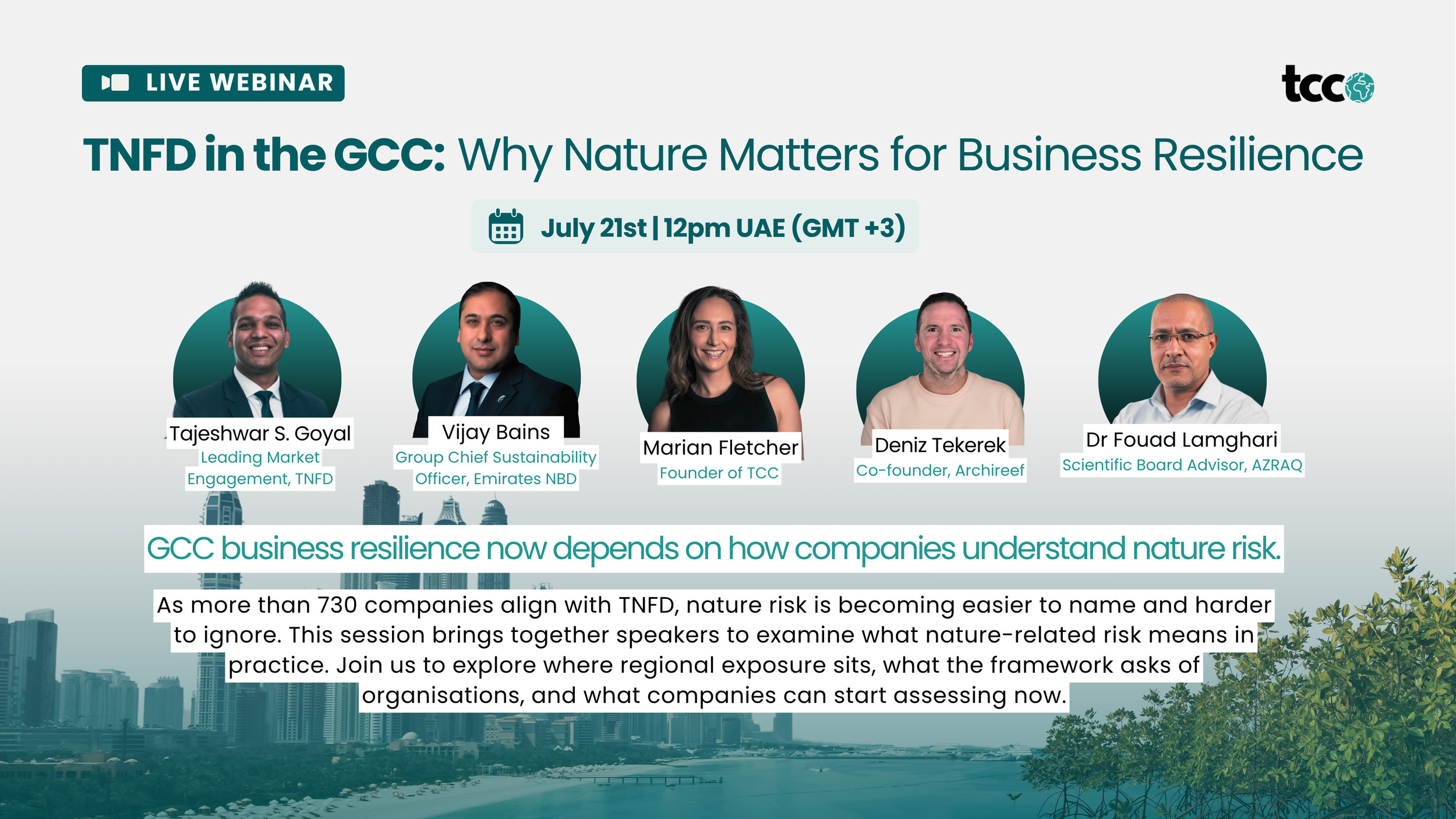
Nature is rapidly becoming one of the most important dimensions of sustainability in the GCC. For years, the region’s conversations have centred on carbon, climate risk and net zero commitments. Our webinar “TNFD in GCC: Why Nature Matters for Business Resilience” made it clear that this is only part of the picture. As shared during the session, “our economies don’t just depend on a stable climate, they also depend on nature. The ecosystems sitting quietly beneath our supply chains, infrastructure and balance sheets.” Nature is not a soft environmental topic. It is a core business resilience issue.
Across the world, nature‑related disclosure is accelerating. Hundreds of organizations have already committed to the TNFD framework, and global standards are beginning to incorporate nature into future reporting requirements. This shift is not theoretical. Markets are already responding. A major manufacturing facility in Europe experienced a 3.1 percent drop in share price after protests over water use. Large companies in Asia have secured discounted financing after completing nature‑aligned assessments. Blue bonds and sustainability‑linked loans are increasingly embedding nature‑related disclosures to strengthen credibility and attract investors. These examples show that nature risk is becoming financially material.
For the GCC, nature risk is especially relevant. The region’s economies depend heavily on marine and coastal ecosystems, water resources and biodiversity. Desalination plants rely on healthy oceans to function. Underground water replenishes far more slowly than it is extracted, making the region almost entirely dependent on the sea. Algal blooms, pollution and ecosystem decline threaten aquaculture, tourism and food security. The Gulf’s ecosystems are tightly interconnected, and disruptions to one part of the system can quickly cascade into broader impacts. Nature loss is not an abstract concern. It is a direct threat to infrastructure, supply chains and long‑term economic stability.
Financial institutions in the region are beginning to integrate nature into lending and investment decisions. Portfolio screening now considers deforestation risks, water scarcity, biodiversity impacts and environmental crime. Water has become a practical entry point because it is tangible, measurable and directly linked to economic stability in one of the world’s most water‑stressed regions. At the same time, nature‑aligned financing instruments are creating new opportunities for businesses seeking better pricing and stronger investor confidence. The financial sector is increasingly recognising that nature risk can influence creditworthiness, operational continuity and future growth.
The webinar also explored how companies can move from awareness to action. Nature‑tech solutions are helping organizations assess their dependencies through satellite imagery, ecosystem surveys and on‑site data collection. Restoration and mitigation projects are becoming part of operational planning, from coastal rehabilitation to biodiversity protection. Digital monitoring tools, including photogrammetry and ecosystem digital twins, are enabling transparent and auditable reporting aligned with TNFD guidance. This combination of assessment, mitigation and monitoring is helping businesses build credibility and reduce exposure to nature‑related risks.
One of the strongest messages from the session was that the GCC is at a pivotal moment. Rapid development across the region mirrors growth patterns seen in other parts of the world, but with the advantage of hindsight. There is a window to integrate nature protection into planning before ecosystems reach irreversible decline. The region’s unique geography, reliance on marine systems and ambitious development agenda make nature a strategic issue rather than a peripheral one. Some organizations are already moving, while others are just beginning, but the direction is clear. Nature is becoming a core part of business strategy, risk management and long‑term resilience.
The key takeaway from the session was simple. Nature risk is business risk. For GCC organizations, the next steps involve building awareness, strengthening capability and integrating nature into existing decision‑making frameworks. Practical tools such as TNFD guidance, learning labs and scorecards can help organizations begin this journey. The shift does not require perfection. It requires momentum, clarity and a willingness to understand how nature underpins economic stability.
Nature is now firmly on the agenda, and the GCC has an opportunity to lead by embedding nature resilience into the heart of business resilience.
